Learning Outcomes
i. Identify the central nervous system (CNS) and endocrine system as the main organs of coordination and control in the body.
ii. Understand the roles of the CNS and endocrine system in regulating body functions.
iii. Recognize how the CNS and endocrine system interact to maintain homeostasis.
i. Central Nervous System (CNS)
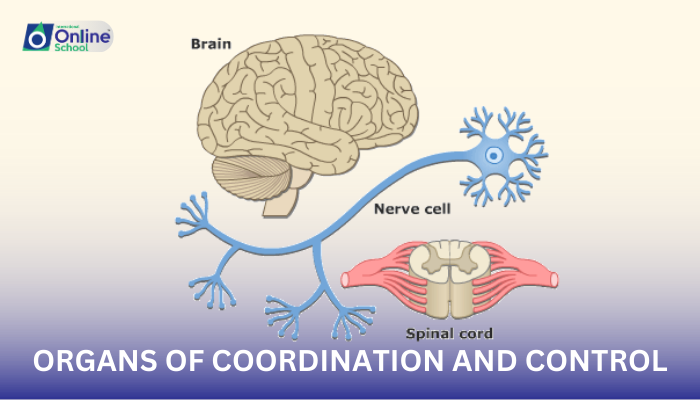
Composition: The CNS is comprised of the brain and spinal cord.
Function: It processes information from sensory organs and other areas of the body, and coordinates the body's response. The CNS is also involved in controlling thoughts, memory, and emotions.
Mechanism: Neurons in the CNS communicate via electrical impulses and neurotransmitters to control various bodily functions rapidly.
ii. Endocrine System
Glands and Hormones: The endocrine system consists of glands such as the pituitary, thyroid, adrenals, pancreas, and gonads, which secrete hormones into the bloodstream.
Function: Hormones regulate longer-term processes in the body, such as growth, metabolism, and sexual development.
Mechanism: Hormones act on target cells with specific receptors and can affect nearly every tissue in the body.
iii. Interaction Between CNS and Endocrine System
Neuroendocrine Control: The hypothalamus in the brain links the CNS to the endocrine system. It controls the pituitary gland, which is the "master gland" that regulates other endocrine glands.
Feedback Loops: The CNS and endocrine system use feedback loops to regulate the body's functions. For example, the CNS can initiate a stress response, leading to the release of hormones, which then provide feedback to the CNS about the body's response to the stressor.
Integrated Responses: These systems work together to ensure that the body can respond appropriately to both internal and external changes, maintaining homeostasis.
In conclusion, the CNS and endocrine system are the primary organs responsible for coordination and control within the body. The CNS responds to immediate changes in the environment, while the endocrine system regulates longer-term processes. Their interaction is vital for the integrated functioning of the body's systems, ensuring that an organism can maintain a stable internal environment and adapt to varying conditions. Understanding the roles and interactions of these systems is fundamental to the study of physiology and the basis for understanding many aspects of human health and disease.
